
Game play
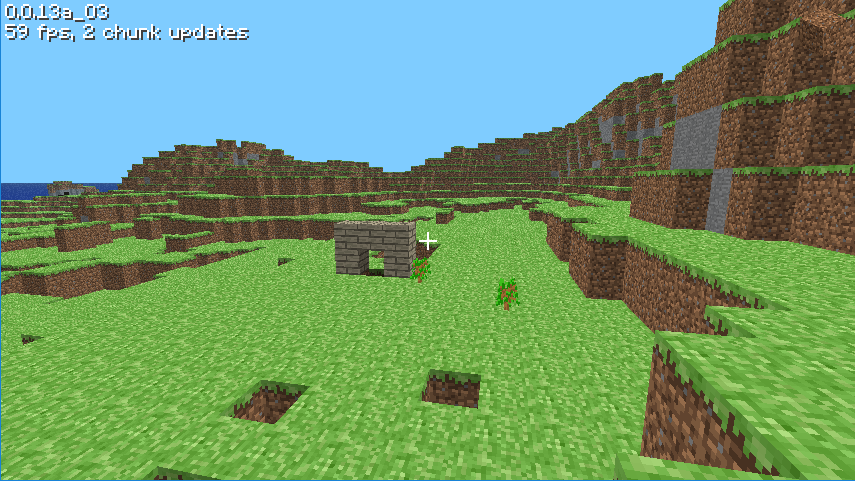
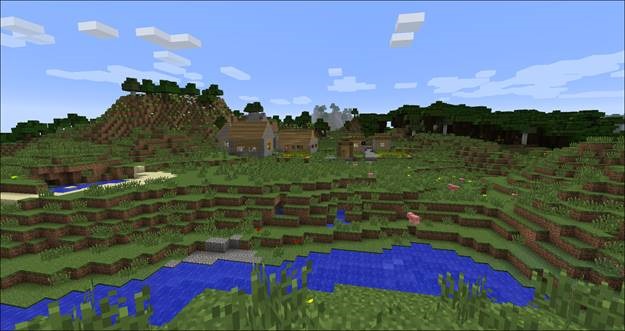
Minecraft is a 3D sandbox game that has no specific goals to accomplish, allowing players a large amount of freedom in choosing how to play the game. However, there is an achievement system. Gameplay is in the first-person perspective by default, but players have the option for third-person perspective. The game world is composed of rough 3D objects—mainly cubes and fluids, and commonly called "blocks"—representing various materials, such as dirt, stone, ores, tree trunks, water, and lava. The core gameplay revolves around picking up and placing these objects. These blocks are arranged in a 3D grid, while players can move freely around the world. Players can "mine" blocks and then place them elsewhere, enabling them to build things.
The game world is virtually infinite and procedurally generated as players explore it, using a seed that is obtained from the system clock at the time of world creation (or manually specified by the player). There are limits on vertical movement, but Minecraft allows an infinitely large game world to be generated on the horizontal plane. Due to technical problems when extremely distant locations are reached, however, there is a barrier preventing players from traversing to locations beyond 30,000,000 blocks. The game achieves this by splitting the world data into smaller sections called "chunks" that are only created or loaded when players are nearby. The world is divided into biomes ranging from deserts to jungles to snowfields; the terrain includes plains, mountains, forests, caves, and various lava/water bodies. The in-game time system follows a day and night cycle, and one full cycle lasts 20 real-time minutes.
Players encounter various non-player characters known as mobs, such as animals, villagers, and hostile creatures. Passive mobs can be hunted for food and crafting materials, such as cows, pigs, and chickens. They spawn in the daytime, while hostile mobs spawn during night-time or in dark places such as caves—including large spiders, skeletons, and zombies. Some hostile mobs such as zombies, skeletons and drowned (underwater versions of zombies), burn under the sun if they have no headgear. Other creatures unique to Minecraft include the creeper (an exploding creature that sneaks up on the player) and the ender man (a creature with the ability to teleport, pick up, and place blocks). There are also variants of mobs that spawn in different conditions, for example zombies have husk variants that spawn in deserts.
Many commentators have described the game's physics system as unrealistic. Liquids continuously flow for a limited horizontal distance from source blocks, which can be removed by placing a solid block in its place or by scooping it into a bucket. Complex systems can be built using primitive mechanical devices, electrical circuits, and logic gates built with an in-game material known as Redstone.
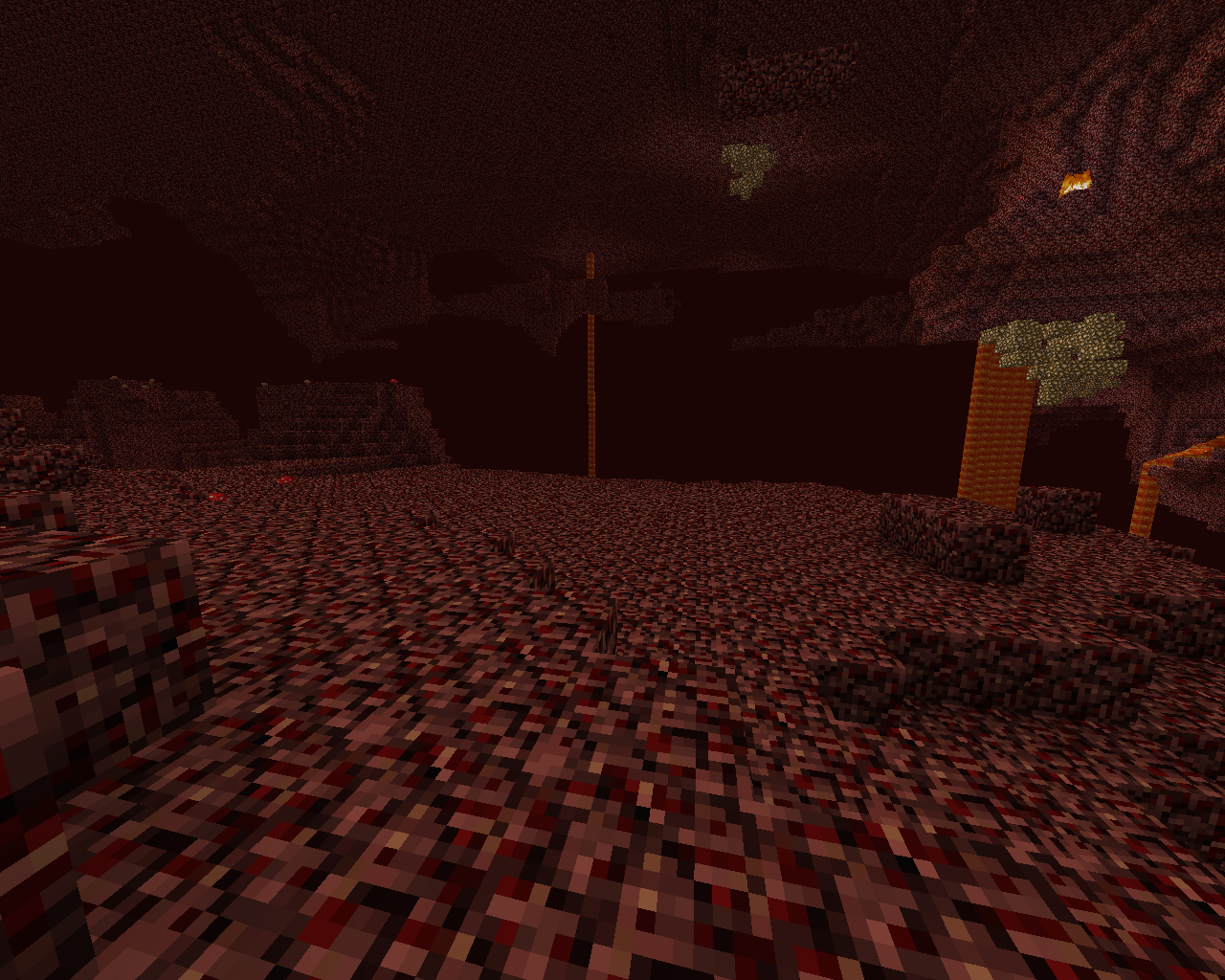
Minecraft has two alternative dimensions besides the overworld (the main world): the Nether and the End. The Nether is a hell-like dimension accessed via player-built portals; it contains many unique resources and can be used to travel great distances in the overworld. The player can build an optional boss mob called the Wither out of materials found in the Nether.
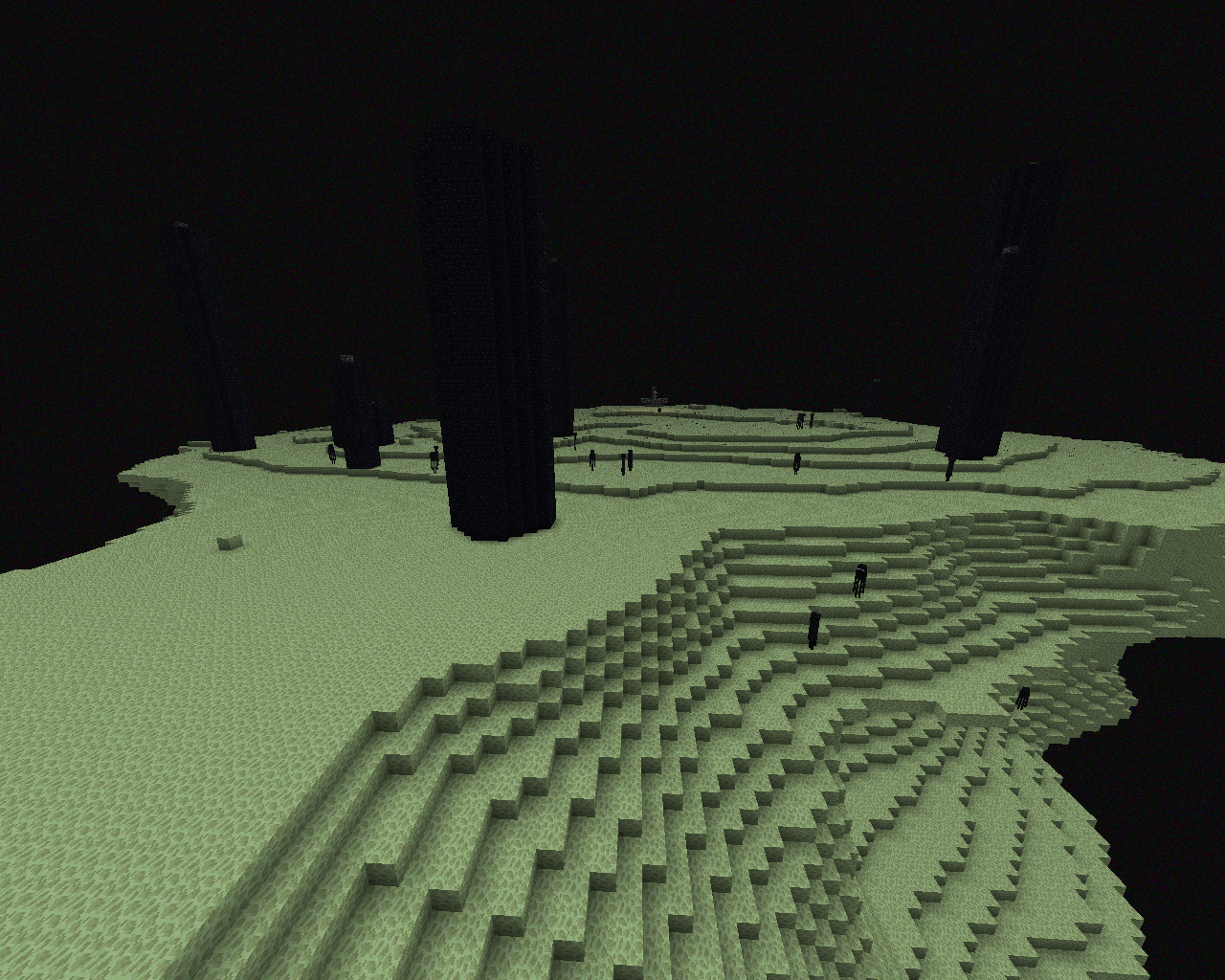
The End is a barren land consisting of many islands. A boss dragon called the Ender Dragon dwells on the main island. Killing the dragon cues the game's ending credits and a poem written by Irish novelist Julian Gough. Players are then allowed to teleport back to their original spawn point in the overworld and continue the game indefinitely.
The game consists of five game modes: survival, creative, adventure, hardcore, and spectator. It also has a changeable difficulty system of four levels. For example, the peaceful difficulty prevents hostile creatures from spawning, and when playing on the hard difficulty players can starve to death if their hunger bar is depleted.
(Below) The Nether, a dimension you can travel to in Minecraft
(Bottom) The End, a island in the middle of space where one of the boss mobs, The Ender Dragon lives.